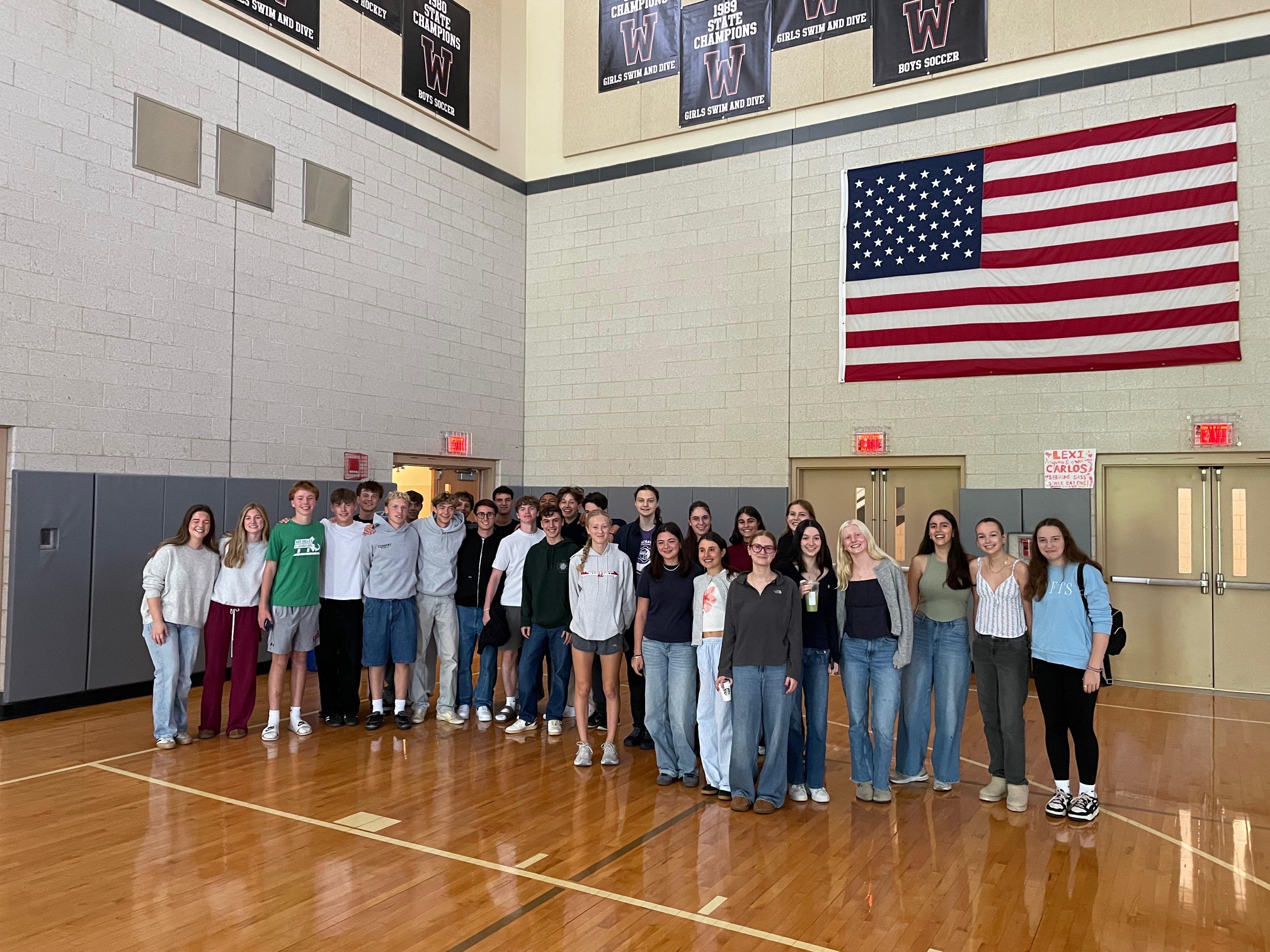
“Six-seven.” “Rizz.” “Sigma.” “Cooked.” “Fire.” “Aura.” These words fly around the hallways like paper airplanes. Yet, despite their pervasiveness around the high school, their power over the classroom is virtually nonexistent.
With students finding hilarity in numeral phrases, math class has become a common location to find a stray snicker or a held-in laugh at the expense of an answer.
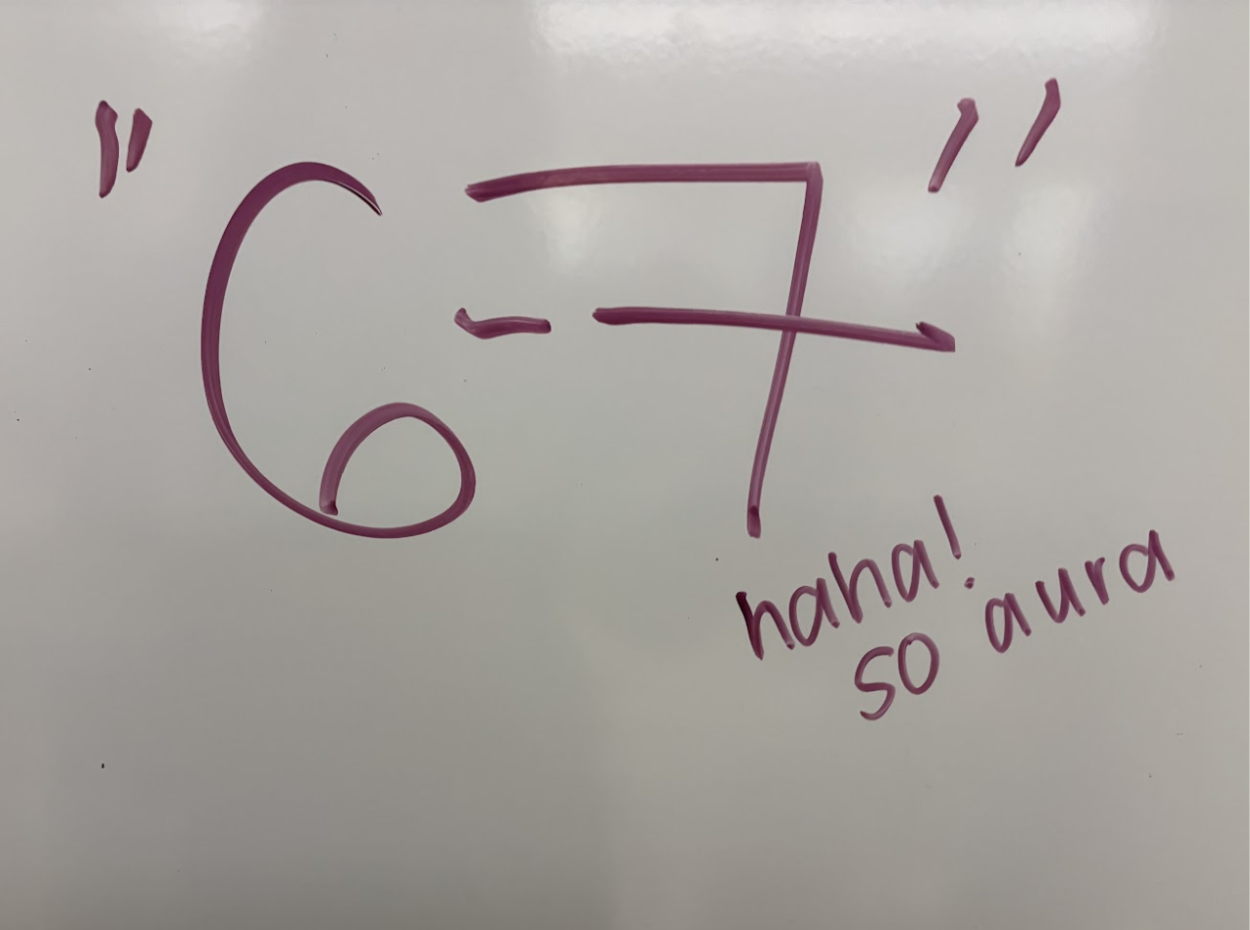
One such numeral phrase is “six-seven,” a social media trend, that is nonsensical in nature but elicits raucous responses.
Despite this behavior, teachers have found that it is easier to acknowledge these trends before continuing onwards in class.
“I don’t ever plan to avoid it anymore. Then just if it happens, I can look back to see if someone is going to be hilarious. ‘Yes, I know. Can we move on? Yes, we can move on’,” said Mr. Craig Brown, a math teacher at the high school.
While pretending to not hear the joke is an option, Brown has found that responding before redirecting the class has been the best way to create a productive learning environment. Though, he acknowledges, most grades at the high school have enough emotional maturity to shy away from these jokes during class time anyway.
This sentiment is echoed by English teacher, Ms. Anna Murphy, who notices students only tend to use slang in class when doing smaller group activities.
Though, students will use social media words like “vibe” to connect to a part of diction: tone. In a class activity, when learning about “The Great Gatsby” by F. Scott Fitzgerald, students listed “red flags” they had seen in characters like Tom Buchanan.
Red flags are distinctive, unpleasant characteristics of a character or person that might deter others from becoming closer to them.
“If we’re accessing our information that way, and it’s making sense to analyze the text, I’m here for it,” said Murphy.
In Spanish 2, there is an entire unit dedicated to teenage trends in the Wellesley community that connect to Spanish-speaking countries. Though slang isn’t the most important aspect of this educational experience, it has had a tendency to come up.
Señora Amanda Holcombe, a Spanish 2 teacher, said, “It’s been my experience so far that most students have been handling the slang well. When things come up they laugh about it as a class and they’re over it as a class.”
While teachers find social media slang to not be present in the classroom, students beg to differ.
Gabby Simon ’29 said, “I think it is distracting. In physics sometimes the numbers turn out to be six-seven, and then the whole class gets derailed.”
For many kids, this slang feels more relevant to their day-to-day life and is more likely to sidetrack them than teachers. Especially considering the long shelf life of trends such as “six-seven” which have been around since early 2025.
“At first it was funny, now it annoys me.” said Inia Altchwager Perez ’27.
She feels that when slang becomes overused it is no longer funny, but just a waste of time.
While there are certainly differing opinions between the faculty and the student body, the use of slang has become a part of the high school’s culture for better or for worse.